We will concede something up front: photo booth financing is a real, workable path, and for the right buyer it makes sense. Operators finance booths through equipment loans (including SBA-backed loans), equipment leases, business lines of credit and seller payment terms. Rates and terms depend on your credit, your business history and the lender, so we will not quote any here. But if you are a venue owner who mainly wants a booth in your own space, you may not need to finance anything. Below we cover both: how buyers fund a booth, and when hosting one free is the smarter move.
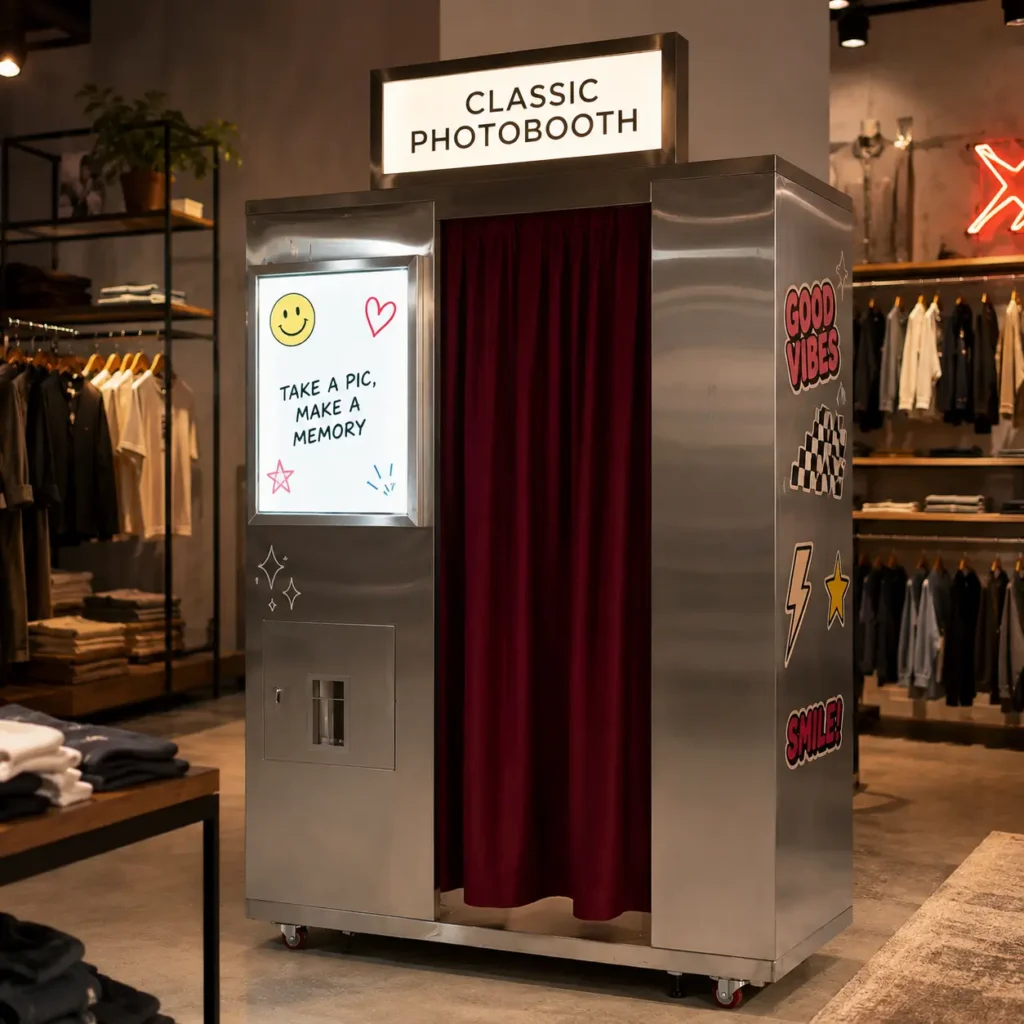
Photo booth financing options for buyers
A walk-in photo booth is business equipment, so it is financed the way most equipment is. Here are the routes buyers most commonly look at.
Equipment loans, including SBA-backed loans
A term loan from a bank or credit union is the most familiar option. You borrow a set amount, buy the booth, and repay over a fixed schedule, with the booth itself often serving as collateral. The U.S. Small Business Administration’s 7(a) program is worth knowing about here: the SBA lists the purchase and installation of machinery and equipment among the eligible uses of 7(a) loan proceeds, alongside working capital. SBA loans are made through participating lenders, so the place to start is your own bank.
Equipment leases
With a lease, a leasing company buys the booth and you pay to use it over a set term. At the end, depending on the lease, you may return it, renew, or buy it out. Leases can mean a smaller upfront cash outlay, but the total paid over the term is usually worth comparing against a loan. Read the end-of-term terms closely, because that is where leases differ most.
Business lines of credit and cards
A revolving line of credit or a business card can cover a purchase quickly, especially if you already have one open. The flexibility is nice. The cost can climb fast if the balance lingers, so this route tends to suit buyers who plan to pay it down quickly.
Seller or vendor payment terms
Some sellers offer their own payment arrangements or work with financing partners. Terms vary widely from seller to seller. Whoever you buy from, ask for everything in writing: total cost, payment schedule, what happens if you pay early, and who owns the booth until the last payment.
What to have ready before you apply
Lenders like a clear story. Before you apply for photo booth financing, pull together:
- A written quote for the booth, including delivery and setup.
- Your business financials and tax returns, or a business plan if you are new.
- Where the booth will go. A signed location agreement is far more convincing than “somewhere busy.”
- Realistic revenue assumptions, with the reasoning behind them.
That last point deserves care. It is tempting to borrow someone else’s best month as your projection. Do not. Booth revenue depends on location, foot traffic, guest price and season, and lenders know it. If you are buying, start by looking at the SmileMore Classic for sale so your quote reflects a real machine.
Costs that financing does not cover
The loan pays for the booth. It does not pay for running it. Buyers should budget for:
Supplies. Paper and ribbon media for the printer, used every session.
Upkeep and repairs. Cameras, printers, touchscreens and payment readers all need attention over time. Our photo booth maintenance guide walks through what that involves.
Insurance and card processing. Both are ongoing costs of operating unattended equipment that takes payments.
The location deal. If the booth sits in someone else’s venue, they will expect a share or rent. See what goes into a photo booth placement contract before you sign one.
Your time. Restocking, troubleshooting and the late-night call when something stops printing.
The $0 alternative: host a booth instead of buying one
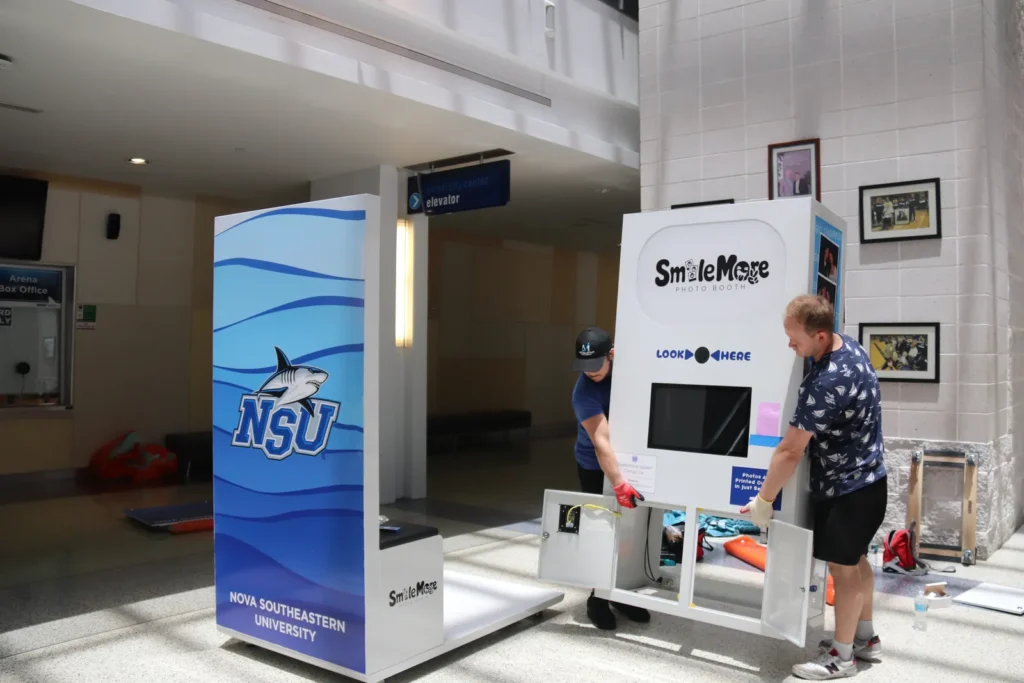
If your goal is a booth in your own venue, not a booth business, there is a path with no loan and no purchase. Through our host program, SmileMore installs a real enclosed walk-in booth at no cost: booth, delivery, install, paper and repairs. It is insured by us and remotely monitored, and same-day repairs from a local crew are what usually happens.
Instead of making payments, you collect them: 10% to 25% of each session, a number we put in writing before you sign, paid on the first day of each month with a sales report attached. The contract covers 12 months, starts with a 90-day trial, and we pull the booth out free if it hasn’t worked out by then. There is nothing to finance because there is nothing to buy.
The trade-off is control. As a host, you do not own the booth, and the guest price is set together with us during review. As an owner, everything is yours to decide, along with everything that comes with it.
Planning to buy? Start with a real number
Tell us where the booth is going and how you plan to run it, and we will put together a quote you can take to your lender.
Buy or host: how to decide
Buying tends to fit people who want to run booths as a business. Maybe you already operate vending equipment, have several locations lined up, or want full control over pricing, branding and placement. Financing lets you start before you have the full purchase price in cash.
Hosting tends to fit venue owners. You want the attraction, the branded strips and the extra revenue, without debt, staffing or repair bills. You would rather give up some control than take on a second job.
Some people do both: host first to see how their guests respond, then buy later for a second location. See whether a photo booth is a good investment for that comparison in more detail.
What our first booth can and cannot tell you
We are early. Today we have two booths live (at Nova Southeastern University in Davie since August 2026, and at Hausmash in Lauderdale-By-The-Sea) and more in setup. August brought in more than 300 paid sessions, but move-in week carried a lot of that, so treat it as a launch figure rather than a run rate. We also had an early hardware fault, which is a good reminder that every booth needs someone ready to fix it. Use the NSU case study as evidence that guests use a well-placed booth, not as a forecast for your loan application.
Financing questions buyers bring us
Does SmileMore publish booth prices?
No. We quote each booth individually. Request one and we will put it in writing.
Can I finance a booth and place it in someone else’s venue?
Yes, that is how many operators work. You will need a written agreement with the venue covering term, share and removal. Our guide to vending machine contracts in Florida covers similar ground.
Is leasing or buying with a loan better?
It depends on your cash flow, taxes and how long you plan to keep the booth. Run both through your accountant before deciding. We are not lenders or tax advisors.
Our commitment either way is the same: a straight answer. If buying makes sense for you, we will quote a SmileMore Classic and help you plan the rollout. If hosting fits better, we will tell you that instead, and you can check whether your venue qualifies for a free booth. Our calendar only fits a few new venues at a time.