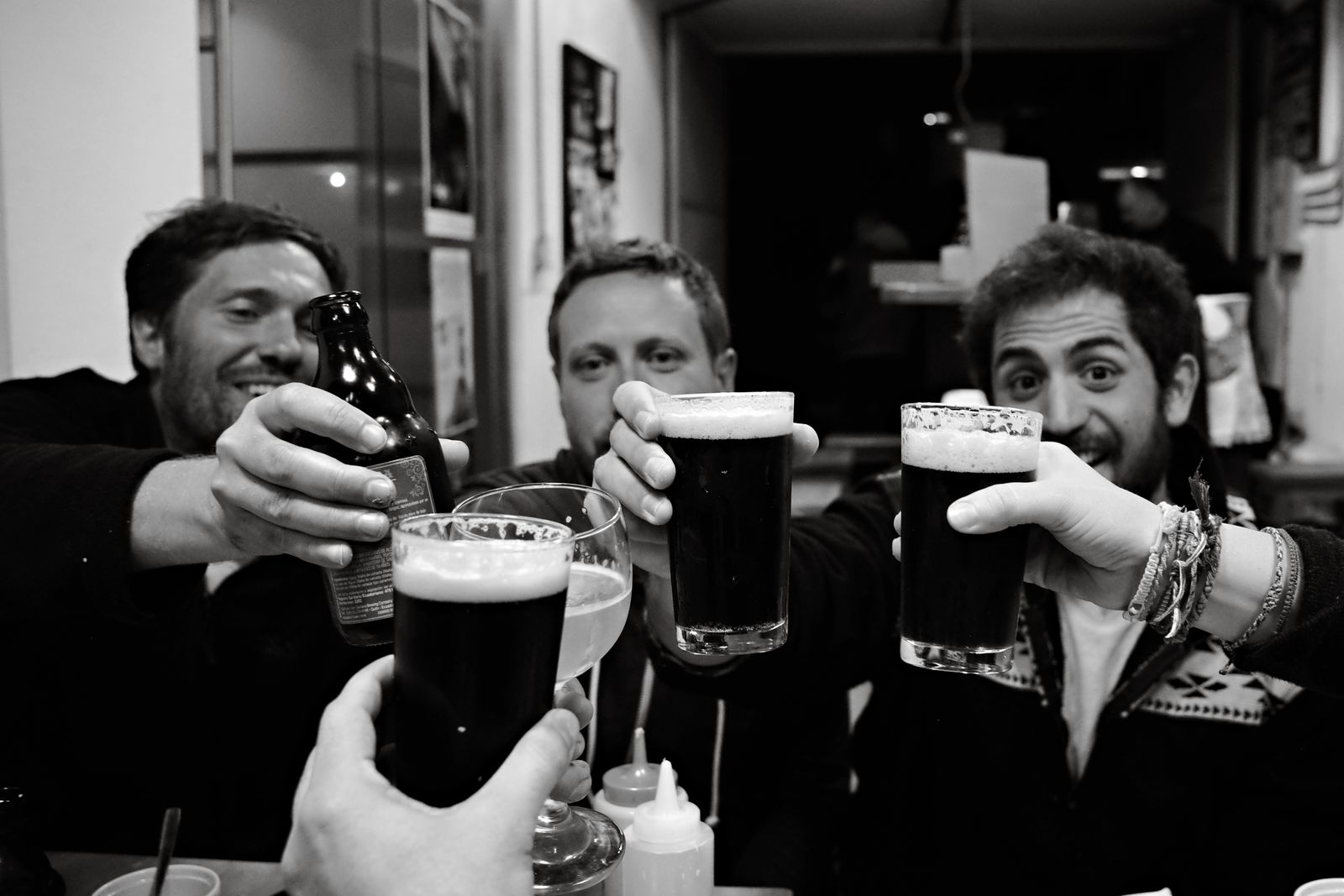
Picture the end of a long dinner. Four friends squeeze onto a bench behind a curtain, the flash pops four times, and about 90 seconds later two strips slide out of the slot. Nobody asks whether they look tired, because in black and white everyone looks like an extra in an old movie. That is the short answer to why a black and white photo booth works so well in bars, restaurants and branded spaces: monochrome flatters people, quiets busy backgrounds, and turns a strip into a keepsake instead of one more phone picture. Here is what makes the look work, and when color is the better call.
Where the black and white strip comes from
The look is older than nearly every bar that uses it. The first photo booth appeared on Broadway in New York City in 1925, and for decades booths relied on wet chemistry that took several minutes to develop a strip. According to the history of the photo booth, the vast majority of booths today are digital, and both black and white and color booths are common in the US.
So when guests see a monochrome strip, they don’t read it as a filter. They read it as a format: the one tucked into family albums, taped inside lockers, pinned above desks. That association does a surprising amount of marketing work for you before anyone has even stepped inside.
Why a black and white photo booth suits bars and restaurants
Hospitality spaces have a mood, and a strip should match it. Monochrome matches more moods than any color treatment we know of.
It forgives almost everything
Inside an enclosed booth, the flash controls the light, which already helps. Black and white goes a step further. A sunburn from the beach, the flush that arrives with the second cocktail, mismatched outfits, a neon shirt that would dominate a color frame: all of it softens into tones of grey. What survives is the part people care about, which is faces and expressions.
It fits any interior
A dive bar, a white-tablecloth steakhouse and a pastel brunch spot have almost nothing in common visually. A black and white strip looks right in all of them. You don’t have to worry whether the print clashes with your brand palette, because it has no palette to clash with.
It reads as a souvenir
Color photos look like the camera roll guests already have. Monochrome looks deliberate, like something you’d keep. Strips end up on fridges, in wallets and stuck in the frame of a bathroom mirror, and each one carries your venue’s name, because we print it on every strip.
If that’s the feeling you want in your room, you can host a SmileMore booth for free and see how your guests take to the strips.
Why brands lean monochrome too
For venues with a strong identity, black and white does something counterintuitive: it makes the brand stand out more, not less. The booth itself can wear a custom wrap in your colors and logo, so the bold branding lives on the cabinet where everyone in the room sees it. The strips stay clean and timeless, with your name printed on each one. Your logo gets the color. The people get the classic portrait.
There’s a social angle as well. Monochrome strips look consistent when guests post them, which gives your venue a recognizable look across dozens of different phones. A tag of @smilemore.photobooths can earn a repost on our Instagram and the SmileMore Wall, and the QR code at the booth gives them the digital copy, so the strip they hold and the one they share match. If you’re working on that side of things, our post on making your restaurant Instagrammable has more ideas.
Color or black and white: how to choose
We’re not purists. Color has its place, and some rooms deserve it.
A rough guide we use when a venue is weighing a black and white photo booth against color:
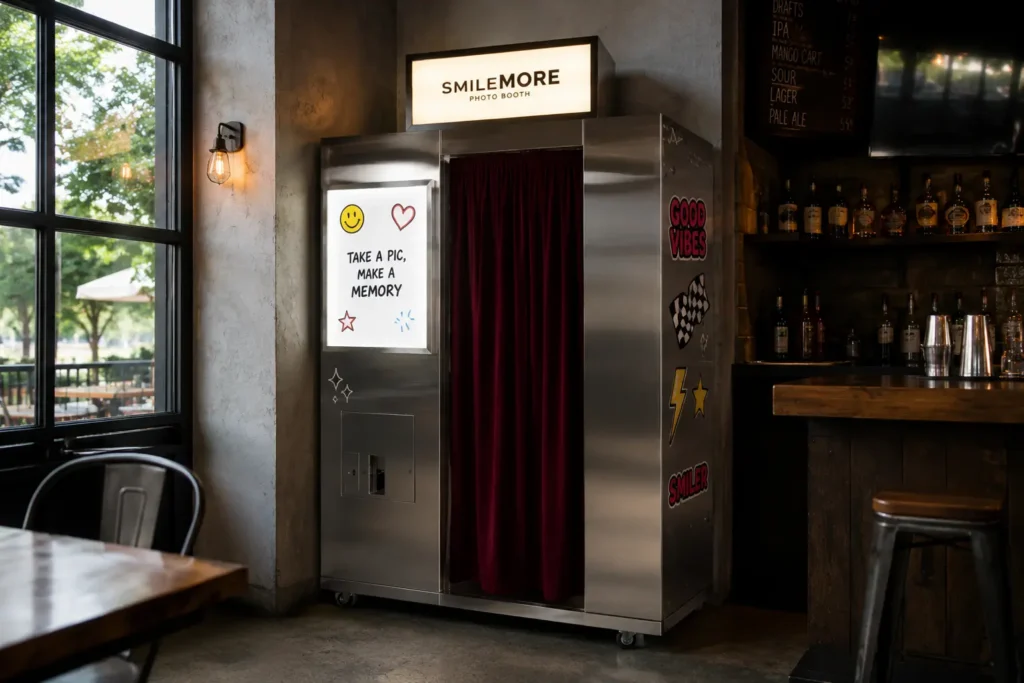
- Lean black and white for nightlife, cocktail bars, steakhouses, speakeasy concepts, hotel bars and any space with a vintage or upscale feel. It also helps where lighting is moody or the decor is busy.
- Lean color when your space is the point: bright murals, a tropical patio feel, a booth wrapped in your signature shade that you’d like guests to remember. Daytime family venues, arcades and dessert shops often suit color.
- Consider both if your crowd changes over the day, like a cafe that becomes a wine bar after dark.
Because our booths are digital, this isn’t a hardware decision. The Canon camera captures the image and the DNP dye-sub printer produces the strip, and guests choose color or black and white right on the screen, so you never have to pick one machine over another. If you love the vintage aesthetic generally, our posts on the retro photo booth and the old school photo booth comeback go deeper on the cabinet side of the story.
Want strips that look like keepsakes?
We install a real enclosed booth in your venue at no cost, and every session can print in black and white. You earn a share of every session.
What guests actually experience
Whatever tone they pick, the routine is identical. A guest steps in, pays by card or phone tap, strikes four poses, and walks out with two printed strips in about 90 seconds plus a QR code for the digital version. Your staff never gets involved.
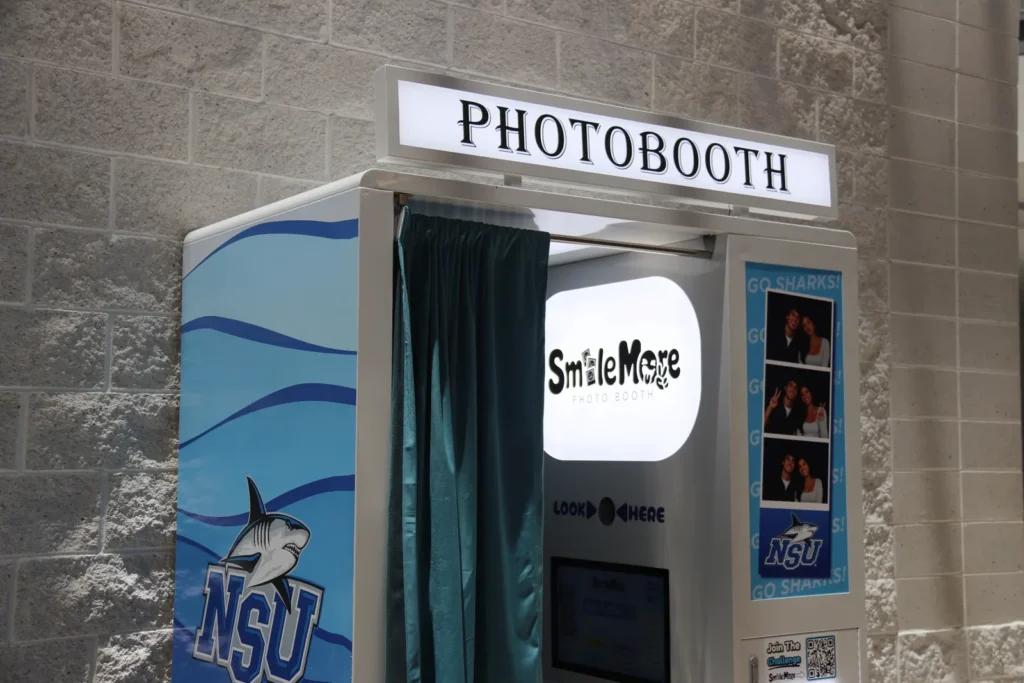
At our first live booth, at Nova Southeastern University in Davie, the two compliments we hear most often are camera quality and print speed. Guests call the experience simple, and they mean it kindly. Early on, some paused at the screen unsure what to press first, so we added on-screen start guidance. That kind of small fix matters more to a strip people treasure than any filter does.
Behind the curtain, your side stays easy. Installation is free, the booth is insured by us, and we keep tabs on it remotely, restock it on site and usually get a local tech out the same day when something’s off. Every session sends 10% to 25% your way. That rate is written into the agreement before anyone signs, and payment arrives on the 1st alongside a monthly sales report. You sign for 12 months, the first 90 days are a trial, and a booth that hasn’t proven itself by then comes out at our expense. Our photo booth install walkthrough covers delivery day.
What owners ask about monochrome strips
Will guests think black and white looks dated?
Usually the opposite: people associate it with classic booths and treat the strip as something to keep. Dated is a blurry color print. A crisp black and white strip from a good camera reads as intentional.
Can the booth match our branding if the strips are black and white?
Yes. We can wrap the cabinet top to bottom in your palette and logo, and every strip carries your venue’s name. The branding stays bold on the booth while the photos keep their classic feel.
Do black and white strips work on Instagram?
They tend to stand out in a feed full of color. Guests scan the QR code at the booth for the digital copy and can tag @smilemore.photobooths to be reposted.
Can guests still get color if they want it?
Yes. Guests choose color or black and white on the screen each session, so there is nothing to swap. If you want to steer the default for your room, tell us what’s working with your crowd.
So which strip would your guests actually keep: the colorful one, or the one that looks like it came out of 1955? If you’re not sure, that’s a fun question to answer together. Tell us about your venue, or browse the Florida photo booth finder to see where SmileMore booths are popping up.