“Should we put in a selfie station or a real photo booth?” We hear some version of that question from venue owners all the time. Here’s the direct answer on selfie booth vs photo booth: if you want an attraction people cross the room for and revisit with friends, an enclosed photo booth with printed strips wins. A selfie station (a mural, a ring light, an open kiosk with a screen) is easier to set up and great for a quick snapshot, but it rarely becomes a reason someone visits. The difference comes down to the curtain, the print and who does the work.
Selfie booth vs photo booth at a glance
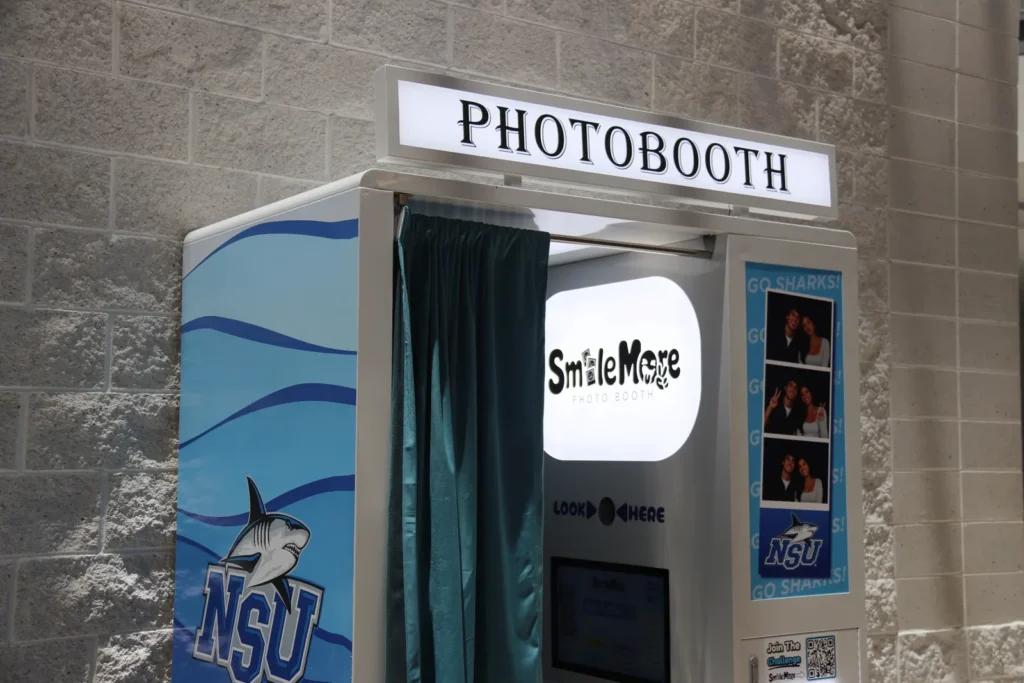
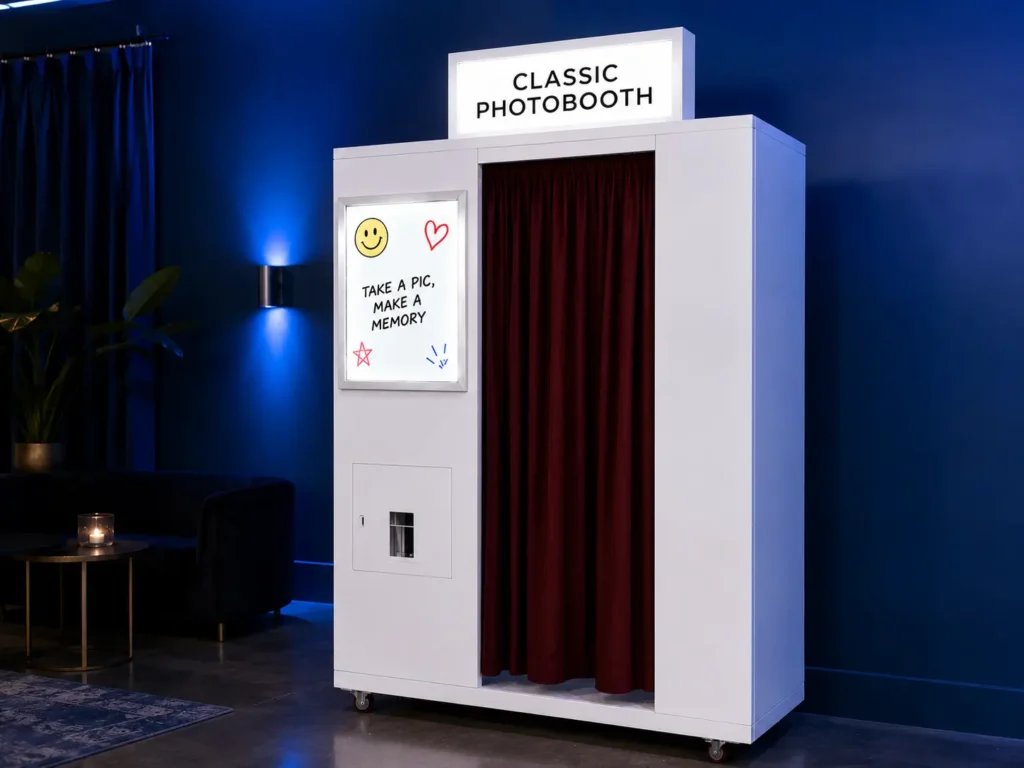
The words get used loosely, so it helps to define them. A selfie station is anything that invites guests to take their own photo in the open: a painted wall, a neon sign with a ring light, or a freestanding kiosk with a touchscreen and a backdrop. An enclosed photo booth is a cabinet with walls, a bench, a curtain, a built-in camera and flash, and a printer that hands you a strip.
| Selfie station | Enclosed photo booth | |
|---|---|---|
| Privacy | Out in the open | Curtained, a little private stage |
| Camera and light | Usually the guest’s phone | Built-in camera and flash |
| What guests take home | A file on their phone | Printed strips, plus a digital copy |
| Space | A wall or small patch of floor | About a 5 x 5 ft corner |
| Draw | A stop on the way past | A destination people seek out |
Neither is wrong. They just do different jobs.
What a selfie station is good at
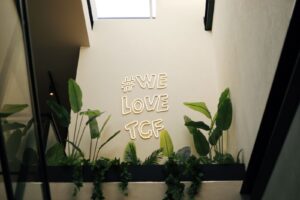
A well-designed mural or neon wall is a smart move for many venues. It’s always on, it needs no power beyond a light, and it puts your name or a recognizable design in the background of guest photos. Outside walls work especially well because they catch passersby, not just paying customers.
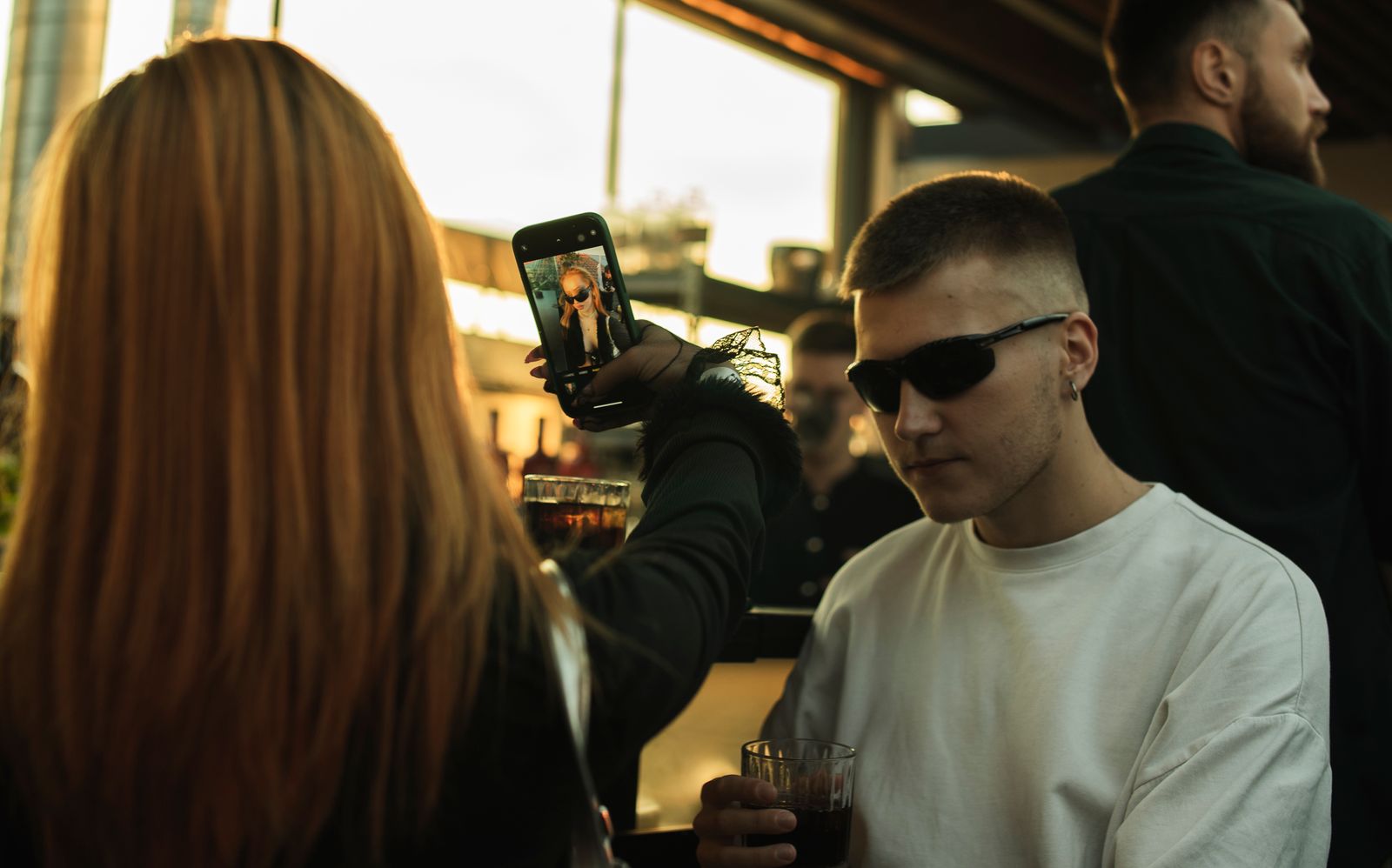
The limits show up over time. A wall gets photographed once by most guests, then becomes part of the scenery. There’s no reason to come back to it with a different group, because the result is the same phone photo every time. Open kiosks with screens add some novelty, but they sit in the middle of the room, which makes a lot of people self-conscious, and they still mostly deliver a file rather than a keepsake.
What an enclosed photo booth adds
The curtain changes behavior
Close a curtain and people relax. Groups that would pose politely in front of a wall start making faces, piling on laps and planning their four shots like a tiny comedy routine. That’s why booth strips are funnier than most selfies and why people want to go again with whoever just arrived.
The photos simply look better
A booth has its own camera and its own flash, set up for a seat a known distance away. Ours use a Canon camera, and the two compliments we hear most from guests at our first booth are camera quality and print speed. Guests also call it simple, as a compliment. When we noticed people hesitating over what to press first, we added on-screen start guidance so nobody has to figure it out.
If an enclosed booth sounds like the better fit, this is how hosting one with us works, with no purchase involved.
The print is the real difference
A selfie lives on a phone among thousands of other photos. A strip goes in a wallet, on a fridge, on a dorm wall. That physical object is the part of the experience a selfie station can’t match, and people clearly still want it. PetaPixel, reporting on Fujifilm’s financial results, noted that the company’s consumer imaging segment, which is mostly its instant-print instax line, grew 22% year over year in fiscal 2022, even as standalone digital cameras declined. People carry better cameras than ever in their pockets, and they still pay for a print they can hold.
Our booths print two strips per session on a DNP dye-sub printer, ready in about 90 seconds, with your venue’s name on every one. The QR code gives them the digital copy too, so they don’t have to choose between the keepsake and the post. Our post on instant print photo booths digs into why that physical strip matters so much for venues.
Staffing, upkeep and who fixes it
This is where the comparison usually surprises owners. A mural needs almost nothing, true. But a kiosk or a ring-light setup that you buy yourself is your equipment: if the screen freezes or someone walks off with an accessory, that’s your problem and often your staff’s time.
With a hosted enclosed booth, none of that lands on you. We install it free, insure it, monitor it remotely and restock it in person. Problems are usually fixed the same day by a local crew. Payment happens at the booth (card or phone tap), so your team never handles cash or fields payment questions. And your venue takes home a 10% to 25% cut of each session, with the rate on paper before signing. If you want the technical side of how modern booths work, see what a digital photo booth is.
Skip the selfie wall debate
We’ll put a real curtained booth in your venue, wrapped in your colors, and handle every bit of upkeep. You just decide where it goes.
When a selfie station is the right call
We’d rather you pick the right tool than the one we offer. A selfie station is the better choice in a few situations:
- You don’t have a 5 x 5 ft corner and a standard outlet to spare, even after rearranging. Our photo booth dimensions guide can help you check.
- You want something on an exterior wall to catch people walking by.
- You need photos for a single event rather than a permanent attraction. For a party or wedding, an event rental may suit you better.
Plenty of venues end up with both: a mural outside that gets people in the door, and a booth inside that keeps them there and brings them back.
Selfie station or booth: what venues ask
Can I have a mural and a booth?
Absolutely. They complement each other. The wall works as a quick snapshot spot, and the booth is the experience people return for.
Does an enclosed booth feel claustrophobic for big groups?
Part of the fun is fitting more people than seems possible on the bench. Groups take turns or squeeze in together, and the curtain makes it feel like a private moment rather than a cramped one.
Which one will my guests actually use more?
We can’t promise numbers for your venue, but our first booth at Nova Southeastern University ran more than 300 paid sessions in its first month, with a lot of that during move-in week. Guests there keep asking whether it’s permanent and react with real enthusiasm when told yes. You can read the details in the NSU case study.
What happens if the booth doesn’t fit our crowd?
That’s what the 90-day trial at the start of our 12-month agreement is for. No traction by the end of it, and we remove the booth at no cost to you.
So when you weigh selfie booth vs photo booth, ask yourself one thing: do you want guests to take a picture in your venue, or do you want them to come to your venue to take a picture? If it’s the second, we should talk. We’re early, spots are limited, and the form takes a couple of minutes.