Twenty-five cents for a strip of eight pictures. That was the deal in September 1926, when the Photomaton opened at 1659 Broadway in Manhattan, and people lined up for it. The old school photo booth has been charming people for a hundred years, and it is having a real comeback in bars, restaurants, cafes and campuses because it offers something a phone cannot: a little room, a curtain, a flash, and a strip you hold in your hand a minute later. If you run a Florida venue, that comeback is something you can host for free.
Here is why the old format still works, what makes a booth feel authentic instead of like a gadget, and where one fits best.
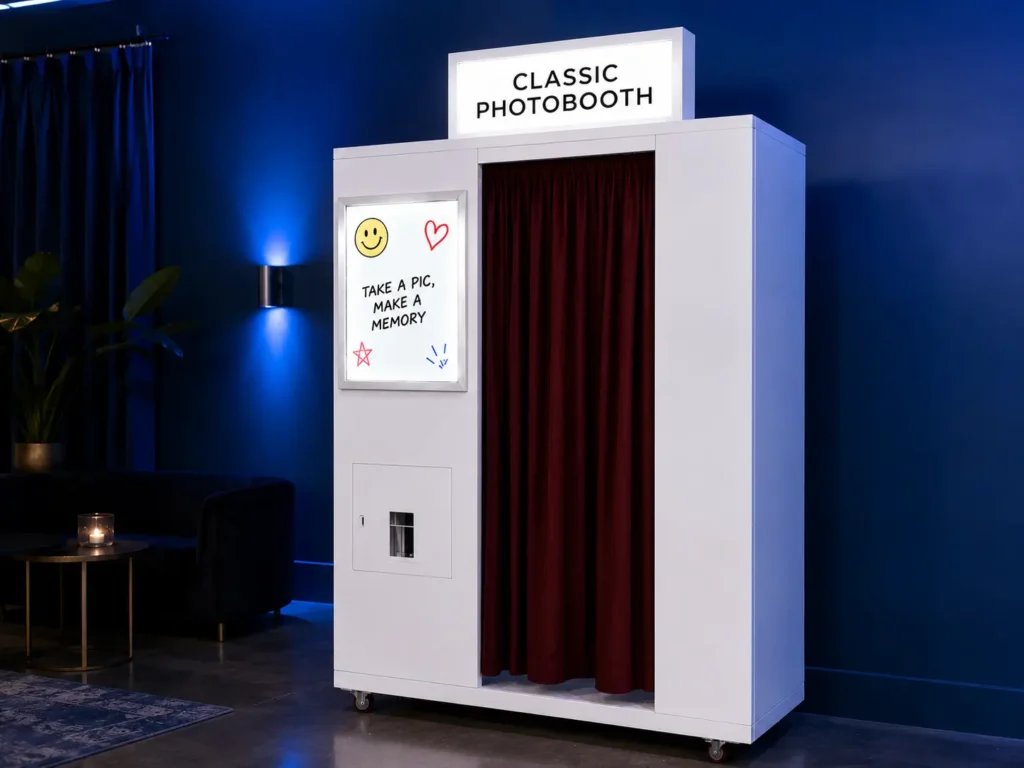
A hundred years in one strip
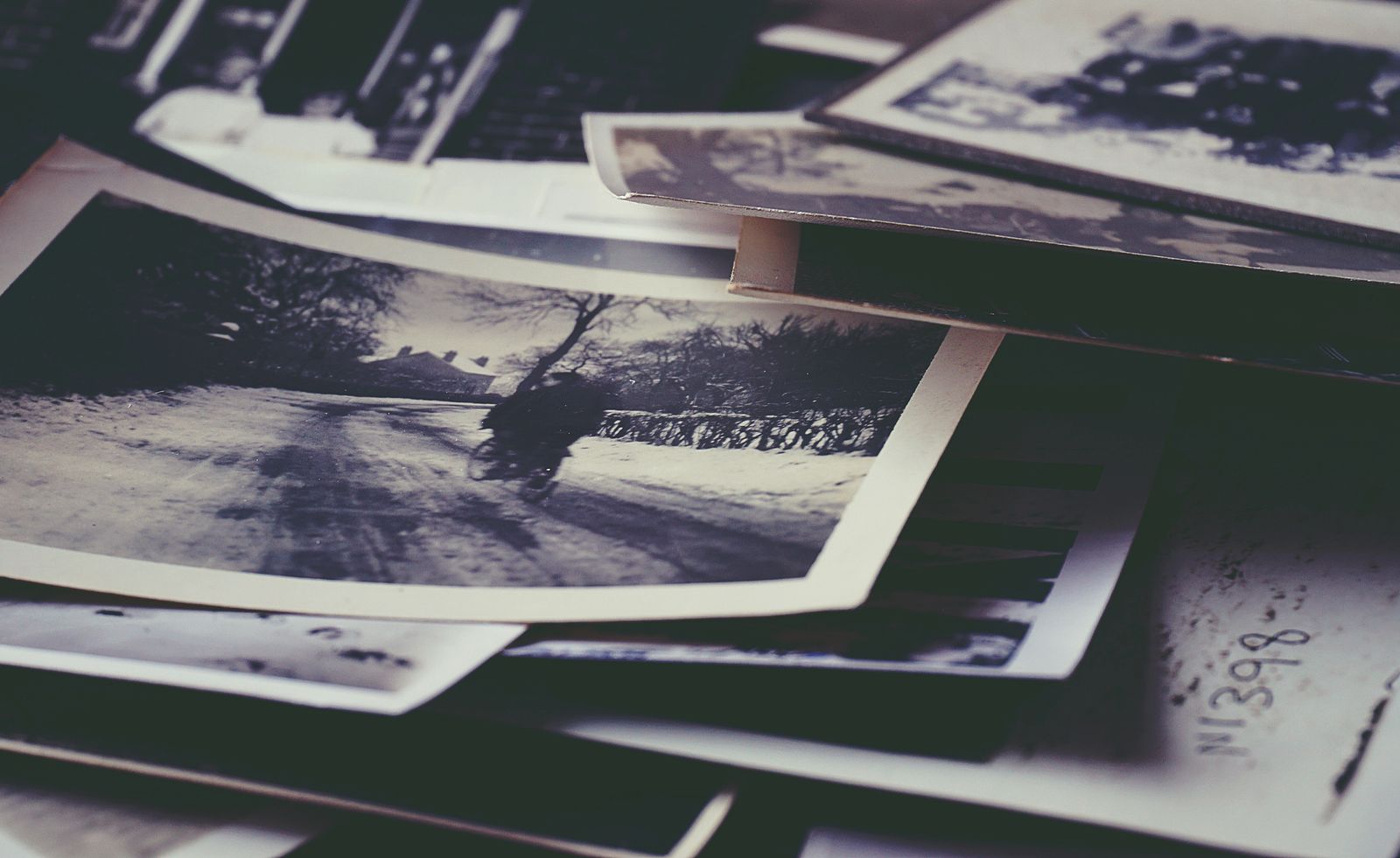
The story of that first booth is worth knowing. According to the Wikipedia biography of its inventor, Anatol Josepho, the Photomaton produced a strip of eight photos developed in about eight minutes, and Time magazine reported in April 1927 that around 280,000 customers had used it. Booths spread to train stations, arcades, boardwalks and dime stores for decades after.
What is striking is how little the ritual has changed. You still duck behind a curtain with someone you like, you still panic slightly when the first flash goes off, and you still wait by the slot for the strip. The technology inside has moved on. The feeling has not.
Why the old school photo booth is back
A phone can take a thousand pictures, which is exactly the problem. Nobody looks at the thousand pictures. A booth gives you four shots, a countdown, and no retakes, and that little bit of pressure is what makes the photos funny and real. The strip is also physical. It goes in a wallet, on a fridge, into a mirror frame at home. It outlives the night.
The curtain matters too. For a minute, a group of friends is in a private little room in the middle of a busy bar, and people act differently there. They get sillier. They squeeze in one more person. That is why a booth works as an attraction: guests walk over on purpose, and they come back later with the people they wanted in the picture.
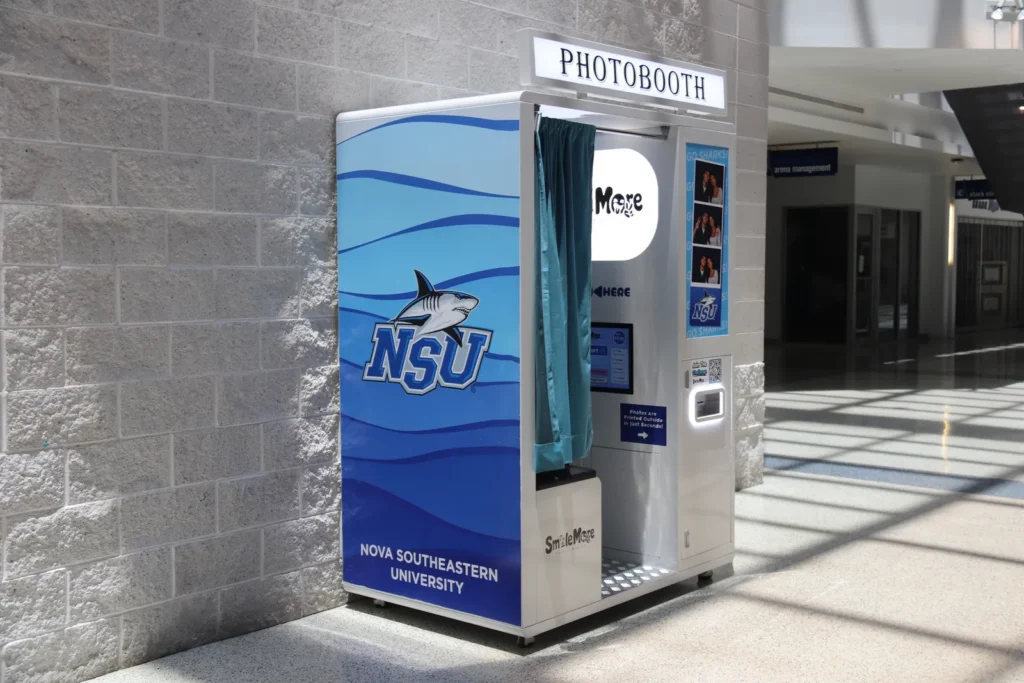
We hear this firsthand in Davie, where our first live booth occupies the Don Taft University Center lobby at Nova Southeastern University. Guests keep asking whether the booth is permanent, and the reaction when we say yes is pure enthusiasm. People call it simple, and they mean that as praise.
If you are wondering whether that energy would carry over to your space, see how hosting a booth with us works. It costs you nothing.
What makes a booth feel authentic
Plenty of things call themselves photo booths. A tablet on a stick is not what anyone means when they get nostalgic. The details that make a booth feel like the real thing are physical: a cabinet you step into, a curtain that closes, a bench, a bright flash, and a strip of photos that drops out of a slot.
Our SmileMore Classic keeps all of that. Picture a metal cabinet roughly 55 in across and 29 in front to back, with a curtain, a lit topper and casters, finished in white, brushed metal or a full wrap. Inside, it is modern: a Canon camera and a DNP dye-sublimation printer. The ritual hasn’t changed much: four poses behind the curtain, two printed strips in about 90 seconds. The new part is a QR code for a digital copy. At our NSU booth, camera quality and print speed are the two things guests compliment most. So the experience is old school, and the photos come out better than the originals ever did. If you are curious how the modern internals compare to film booths, read what is a digital photo booth, and for the design side, see our post on the retro photo booth.
Where an old school booth fits best
Bars, breweries and nightlife
The booth was made for the second round. Groups of friends, date nights and birthday crews all end up in it. Our brewery event ideas and bar promotion ideas posts show how venues build nights around attractions like this.
Restaurants, cafes and hotels
Anywhere people linger with someone they care about works well. A wrapped booth in your colors with your name printed on every strip turns the photo into a souvenir of your place. Hotels in particular can treat it as an amenity guests remember; see our Florida hotel amenities guide.
Campuses, malls and attractions
High-traffic public spaces are where booths lived for most of their history. Our NSU booth is proof the format still lands with a crowd that grew up on phones. More on that in our campus photo booth post.
Bring the curtain and the flash back
Hosting one costs you nothing: we bring in a real walk-in booth and you get a share of every session. If the old magic doesn’t land with your crowd in 90 days, we take it out free.
Hosting one without buying one
Here is the part the 1926 operators would envy about running an old school photo booth today. You do not need to buy, stock or fix anything. We install the booth for free, along with delivery, paper and repairs, and we insure it. You collect a share of each session, anywhere from 10% to 25%, and that figure is settled in writing before you sign. Payouts come on the 1st, monthly, with a sales report. Guests settle up with a card or a phone tap, so nobody on staff handles cash. Remote monitoring, in-person restocking and (usually) same-day repairs by our local crew come with it.
Our agreement lasts 12 months, with a 90-day trial at the front. Your part is a corner close to 5 x 5 ft and a standard wall outlet. The full rundown is on our hosting FAQ.
For context on how it can go: in its first month, August 2026, the NSU booth passed 300 paid sessions and guests spent about $2,400 on it. Much of that came during move-in week, so read it as a launch, not a monthly average. We are early, with two live booths and more in setup, and we keep the number of new venues small.
Old school booth questions, answered
Is it real film inside?
No. The look and ritual are classic, but the camera is a Canon and the printer is a DNP dye-sublimation unit, so prints come out fast and dry.
Will a full-size booth fit through an older building’s door?
If the door is standard width, yes: at around 55 by 29 inches and on casters, it rolls right through. We confirm the path during the site review.
Can guests share the photos online too?
Yes. A QR code on screen hands over the digital copy, and a tag of @smilemore.photobooths puts guests in line for a repost on Instagram or the SmileMore Wall.
We will admit the originals had one advantage we cannot claim yet: they were everywhere, in every station and arcade. We have two live booths today and are adding venues carefully. If you want yours to be one of the next, tell us about your space and you’ll get a straight answer on fit.